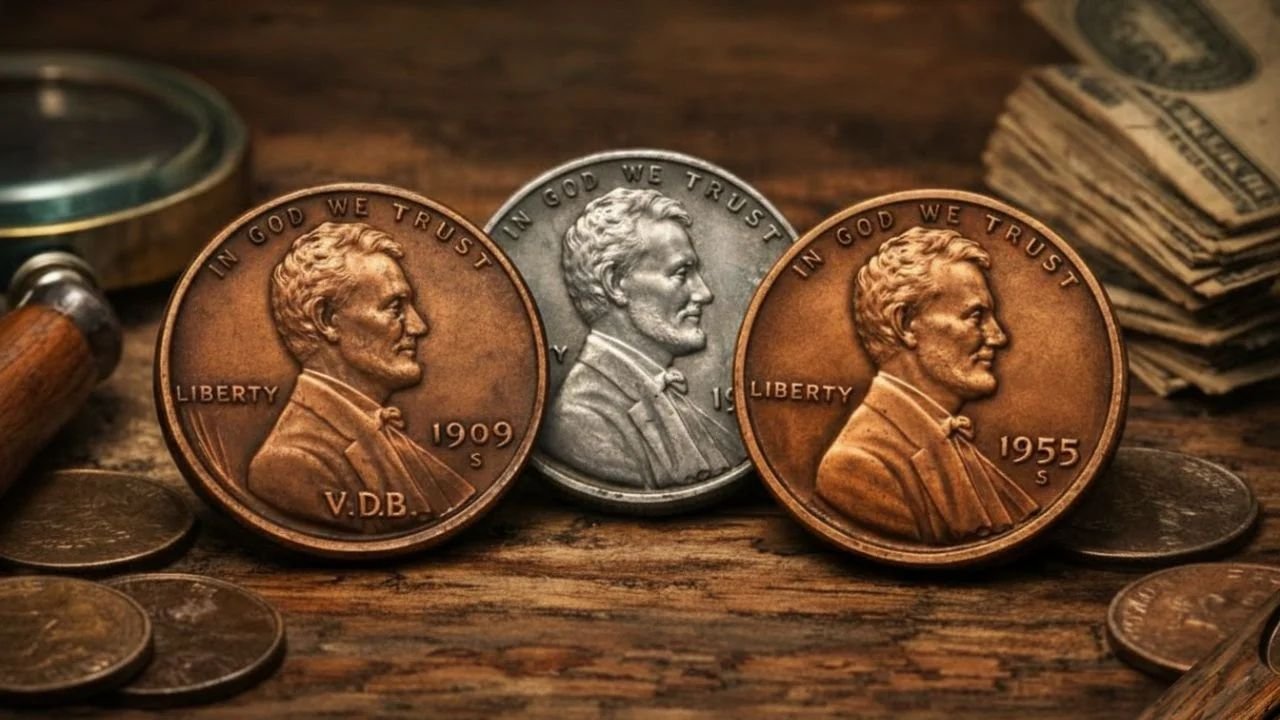
Few coins carry the emotional and financial weight of the Lincoln Wheat penny. Introduced in 1909 by the United States Mint, this small copper coin became the first regular-issue U.S. coin to feature a real historical figure — President Abraham Lincoln. Designed by Victor David Brenner, the portrait remains one of the most recognizable images in American numismatics.
Minted from 1909 through 1958, Wheat pennies were once everyday pocket change. Today, certain rare examples command six- and seven-figure prices. While most are worth only a few cents above face value, a handful have achieved legendary status in the collector market.
Here’s what truly drives million-dollar valuations in 2026 — and how to identify the coins that matter.
What Makes a Wheat Penny Worth Millions?
Age alone does not determine value.
Three primary forces influence a Wheat penny’s price:
1. Rarity and Survival Rate
Some coins were produced in small numbers. Others were common but few survived in high condition.
2. Mint Errors
Accidental mistakes during production — wrong metal, doubled dies, missing mint marks — can transform a penny into a historic rarity.
3. Condition and Color
Copper coins are graded not only by wear but also by color. Red (RD) examples retaining original mint luster command massive premiums over Brown (BN) examples.
Professional certification by companies such as Professional Coin Grading Service and Numismatic Guaranty Company plays a critical role in establishing authenticity and market trust.
The 1943 Bronze Penny: A Wartime Legend
In 1943, copper was redirected toward World War II ammunition production. The Mint switched to zinc-coated steel planchets. However, a small number of leftover copper blanks from 1942 were accidentally struck with 1943 dies.
The result: the 1943 Bronze (Copper) Lincoln cent — one of the most famous error coins in American history.
Fewer than 20 authenticated examples are believed to exist across all mints.
Recent auction prices for high-grade examples have exceeded $1.7 million.
Authentication is essential. A genuine 1943 copper penny:
- Does not stick to a magnet
- Weighs approximately 3.11 grams
- Has verified die characteristics
Counterfeits are common, making certification mandatory.
The 1944 Steel Penny: The Reverse Error
The following year, the opposite mistake occurred. A small number of 1944 pennies were struck on leftover steel planchets intended for 1943.
These coins should have been copper, but instead appear silver-gray like the previous year’s steel cents.
Authenticated 1944 steel cents have sold between $125,000 and $400,000 depending on condition.
1909-S VDB: The First-Year Key Date
The 1909-S VDB penny represents the holy grail for many collectors.
When Brenner’s initials “VDB” were prominently placed on the reverse, public criticism forced their removal. Before the change, the San Francisco Mint had already produced only 484,000 coins — a tiny mintage by any standard.
Even in circulated condition, examples often trade for $700 to $1,500. High-grade Red specimens have surpassed $170,000 at auction.
This coin remains a cornerstone of serious Wheat penny collections.
1914-D: A Scarce Early Issue
The 1914-D penny from Denver had a modest mintage, and few examples survived in high condition.
Circulated examples range from $150 to $400. Mint State Red coins have exceeded $150,000 in exceptional grades.
Because counterfeits exist, professional authentication is strongly recommended.
1922 “No D” Penny
In 1922, only the Denver Mint produced pennies. Due to heavily worn dies, some coins show a weak or missing “D” mint mark.
Collectors prize strong “No D” examples with clear reverse details.
Prices range from $500 in circulated grades to over $50,000 for high-grade certified coins.
1955 Doubled Die Obverse
The 1955 Doubled Die is perhaps the most visually dramatic Wheat penny variety.
Clear doubling appears on the date and inscriptions, visible without magnification. Thousands entered circulation before the Mint detected the error.
Circulated examples often sell for $1,000–$1,800. High-grade Red examples have topped $120,000.
It remains one of the most recognizable mint errors in U.S. history.
1958 Doubled Die: A Late-Series Rarity
Unlike the 1955 variety, the 1958 Doubled Die is far rarer.
Only a few dozen confirmed examples are known, making it a modern-era sleeper rarity.
High-grade specimens have sold for more than $30,000.
Understanding Color Designations
Copper coins are categorized by color:
- Red (RD): 95%+ original mint luster
- Red-Brown (RB): Partial original luster
- Brown (BN): Fully toned
For key dates, the difference between Brown and Red can mean tens of thousands of dollars.
A 1914-D Brown coin might sell for several hundred dollars, while a Red MS-66 example can exceed six figures.
How to Check Your Wheat Pennies
If you discover Wheat pennies in old jars or inherited collections, follow these steps:
- Identify the date and mint mark (below the date).
- Use a magnet to test 1943 and 1944 cents.
- Weigh suspicious coins accurately.
- Examine for visible doubling on 1955 and 1958 dates.
- Avoid cleaning under any circumstances.
Cleaning permanently damages value, even if the coin appears brighter.
If you believe you’ve found a significant coin, submit it for professional grading.
Market Outlook for 2026
The Wheat penny market remains strong in 2026, especially for:
- Certified key dates
- High-grade Red examples
- Major error coins
- Registry-quality specimens
Online auction platforms and global participation have increased transparency and liquidity. While common circulated Wheat pennies typically sell for only a few cents each, elite examples continue attracting competitive bidding from serious collectors.
Are Wheat Pennies a Good Investment?
Rare coins should be purchased primarily for knowledge and passion.
That said, historically significant Wheat pennies — especially authenticated rarities — have demonstrated strong long-term performance compared to many collectible categories.
However, transaction fees, grading costs, and market cycles require informed participation. Diversification remains wise.
Final Thoughts
The Lincoln Wheat penny represents more than currency.
It reflects wartime adaptation.
It captures early 20th-century design.
It rewards careful observation.
Most Wheat pennies remain affordable and accessible. But a select few — defined by rarity, condition, and authenticity — continue to achieve extraordinary valuations in 2026.
And sometimes, the smallest coin carries the largest story.