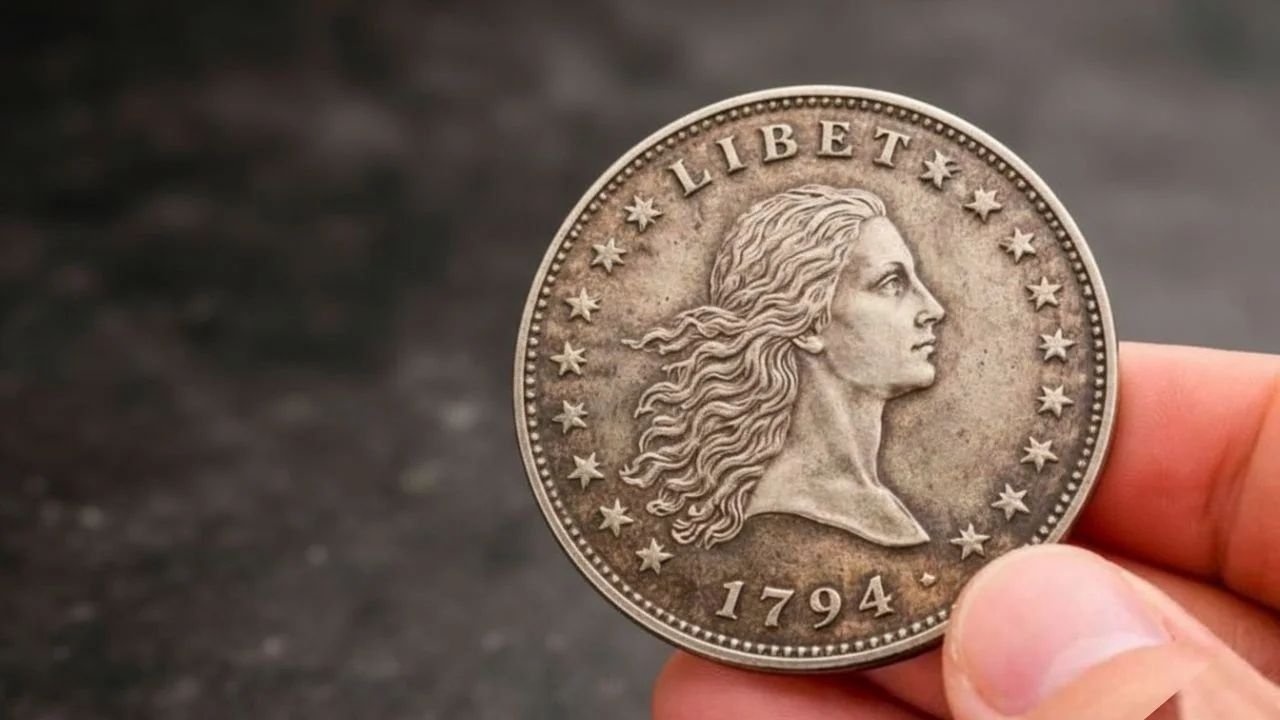
In the world of elite collectibles, few assets command the prestige, history, and financial power of the Flowing Hair Dollar. Often described as the crown jewel of American numismatics, this remarkable silver coin has achieved auction prices exceeding $10 million.
But its value extends far beyond the price tag. It represents the birth of the American monetary system and the ambition of a young nation determined to establish credibility on the global stage.
For serious collectors and alternative asset investors, the 1794 Flowing Hair Dollar is more than a coin. It is a foundational artifact of American financial history.
The Birth of America’s First Silver Dollar
The journey began with the Coinage Act of 1792, which formally established the United States Mint. The new republic needed a standardized currency to support commerce and reinforce national identity.
By 1794, production began on the first official U.S. silver dollar. The design was entrusted to Robert Scot, the Mint’s first chief engraver. His artistic vision captured the spirit of the era.
The obverse features Lady Liberty with windswept, flowing hair — a powerful symbol of freedom and independence. The reverse presents a small eagle surrounded by a wreath, representing strength and unity.
This was not merely currency. It was a declaration. Every transaction made with this coin reflected America’s emergence as a sovereign economic power.
Why the 1794 Flowing Hair Dollar Is Worth Over $10 Million
High-value collectibles are driven by three primary factors: rarity, condition, and historical importance. The 1794 Flowing Hair Dollar excels in all three categories.
Extremely Limited Mintage
Only 1,758 coins were struck in 1794. Even by 18th-century standards, that was a small production run. Today, experts estimate that fewer than 150 examples survive.
For perspective, that is a smaller surviving population than many luxury hypercars produced in modern times. Scarcity at this level creates intense competition among top-tier collectors.
The “First of Its Kind” Premium
Markets consistently reward “firsts.” The first edition of a groundbreaking book, the first production of a luxury watch model, or the first issue of a currency series often carries exponential value.
The 1794 Flowing Hair Dollar holds the distinction of being widely regarded as America’s first silver dollar. That historical primacy places it in a category of its own.
Condition Drives Exponential Growth
Most surviving examples show heavy wear from circulation. However, a handful remain in exceptional condition.
One nearly pristine specimen sold for more than $10 million at auction, setting a record and redefining the upper limits of rare coin investing. Collectors compete aggressively for coins with strong strike quality, minimal wear, and original surfaces.
In elite collecting circles, quality is everything.
Coin Specifications at a Glance
Understanding the technical details adds depth to its investment profile:
- Year Issued: 1794
- Designer: Robert Scot
- Composition: 90% silver, 10% copper
- Original Mintage: 1,758 pieces
- Estimated Survivors: Fewer than 150
- Record Auction Price: Over $10 million
These numbers illustrate why this coin occupies a rarefied position in global collectibles markets.
A Symbol of Early American Confidence
In 1794, the United States was still an experimental republic. Establishing a national currency signaled stability to international trade partners and domestic markets alike.
Silver dollars were particularly important because they aligned with global bullion standards at the time. The new nation needed credibility, and producing a silver coin of substantial weight and purity demonstrated financial seriousness.
The Flowing Hair design also reflected Enlightenment ideals. Liberty was not portrayed as a monarch or military leader, but as a symbol of individual freedom — a deliberate philosophical choice.
Owning one today means holding the physical embodiment of America’s early economic ambition.
What Elite Collectors Look For
Serious investors evaluating a 1794 Flowing Hair Dollar focus on several critical factors:
Strike Quality
Early Mint equipment was primitive. Many examples show weak strikes. Coins with sharp detail in Liberty’s hair and the eagle’s feathers command premium prices.
Surface Preservation
Original mint luster and natural toning significantly increase desirability. Cleaning or polishing dramatically reduces value.
Provenance
A well-documented ownership history adds credibility and market appeal. Coins previously held in prestigious collections often achieve stronger auction results.
Professional Certification
Authentication and grading by leading services provide assurance of authenticity and condition. In a market where individual coins can be worth millions, third-party verification is essential.
The Investment Case for Ultra-Rare Coins
High-net-worth investors increasingly diversify into tangible heritage assets. Rare coins offer:
- Limited global supply
- Strong historical appreciation trends
- Portability and liquidity
- Hedge characteristics against currency volatility
- Cross-border collector demand
Unlike speculative assets driven by short-term hype, ultra-rare coins are backed by centuries of documented market behavior.
The 1794 Flowing Hair Dollar sits at the top of this category. It is often compared to museum-grade art or historically significant manuscripts in terms of prestige.
Could Another Record Be Set?
With fewer than 150 surviving examples and even fewer in high grades, supply is permanently constrained. Meanwhile, global wealth continues to expand, and demand for trophy-level collectibles remains strong.
Many experts believe future sales could surpass previous records, especially if an exceptional specimen re-enters the market.
In elite auctions, rarity and symbolism often outweigh traditional valuation models.
Final Thoughts: A Coin That Built a Nation’s Identity
The 1794 Flowing Hair Dollar is more than silver and copper. It is the foundation of American coinage, a declaration of independence in monetary form, and a benchmark in the world of rare assets.
Its eight-figure valuation reflects not only scarcity, but also legacy. Few objects combine historical significance, artistic beauty, and financial prestige so seamlessly.
For collectors, investors, and historians alike, this coin represents the ultimate intersection of wealth and heritage.
And while discovering one in an attic would be extraordinary, its true value lies in what it symbolizes — the bold beginnings of a nation determined to define its own financial destiny.