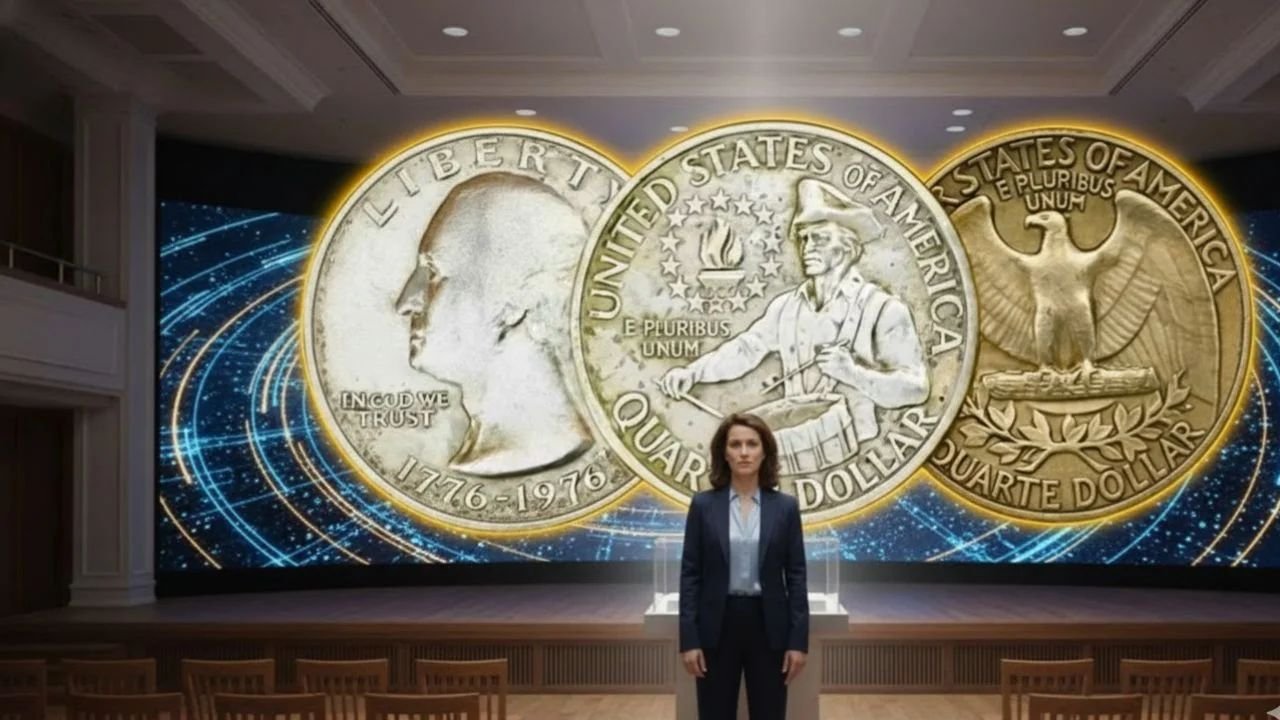
The 1776–1976 Bicentennial Quarter is more than spare change. It’s a symbolic tribute to America’s 200th anniversary and one of the most recognizable modern U.S. coins ever struck. While hundreds of millions were minted, a select group of high-grade, silver, and error examples have quietly become valuable collector assets.
In 2026, interest in Bicentennial coinage remains strong. For investors, collectors, and modern numismatics enthusiasts, understanding what separates a 25-cent coin from a three- or four-figure rarity is essential.
Historical Significance and Design
To commemorate the nation’s bicentennial, the United States Mint launched a special circulating commemorative program. The quarter, half dollar, and dollar were redesigned with unique reverses while retaining their traditional obverse portraits.
The Bicentennial quarter features the familiar portrait of George Washington on the obverse, designed by John Flanagan. However, instead of a single year, the coin carries the dual date “1776–1976.”
On the reverse, a colonial drummer boy takes center stage — a design created by Jack L. Ahr. Above the drummer appears a torch encircled by thirteen stars, representing the original colonies and the enduring flame of liberty.
Interestingly, no quarters dated “1975” exist. All quarters struck in both 1975 and 1976 carry the 1776–1976 dual date.
Mintage and Composition
Bicentennial quarters were produced at three U.S. Mint facilities:
- Philadelphia (no mint mark)
- Denver (“D”)
- San Francisco (“S”)
Two primary compositions were issued:
Copper-Nickel Clad (Circulation Strikes)
These were released for everyday use and represent the overwhelming majority of surviving examples.
40% Silver (Collector Issues)
The San Francisco Mint produced special 40% silver versions for collectors. These were sold in Mint Sets and Proof Sets and were never intended for circulation.
If you’re checking your coin, examine the edge:
- A copper-nickel clad coin shows a visible copper stripe.
- A 40% silver coin has a uniform silver-gray edge.
Bicentennial Quarter Value Guide (2026)
Here’s how values typically break down in today’s market:
Circulated Clad (P or D)
Worn examples remain common and are generally worth face value (25 cents).
Uncirculated Clad (Mint State)
High-grade coins preserved in rolls or sets can sell for $1 to $5, depending on luster and strike quality.
Clad Proof (San Francisco “S”)
Mirror-like Proof coins from standard Proof Sets typically trade between $5 and $20.
Uncirculated 40% Silver
Silver versions in Mint State condition often command $15 to $50, depending on grade and silver prices.
40% Silver Proof (Deep Cameo)
Strongly contrasted deep cameo examples can range from $60 to $200 or more, particularly in grades PR-69 or PR-70.
Error Coins
Certified error coins — such as dramatic doubled dies, major off-center strikes, or clipped planchets — may sell anywhere from $500 to $3,000+, depending on rarity and eye appeal.
What Makes a Bicentennial Quarter Valuable?
Most Bicentennial quarters are affordable collector pieces. However, several key factors can significantly increase value.
1. Silver Content
The 40% silver coins carry intrinsic metal value in addition to numismatic demand. These are inherently more desirable than clad versions.
2. Condition and Grade
Condition is everything in modern coin markets. Coins graded MS-67 or higher by major certification services can sell for substantial premiums. Proof coins with strong “deep cameo” contrast are particularly sought after.
3. Mint Errors
Authentic mint errors drive serious collector interest. Look for:
- Clear doubled lettering or devices
- Off-center strikes
- Broadstrikes
- Clipped planchets
- Die cracks or cuds
Professional authentication is essential before assigning high value to any suspected error.
4. Eye Appeal
Sharp strike detail in the drummer’s features and Washington’s hair, along with clean, unblemished fields, significantly improves desirability.
Certified High-Grade Standouts
While Bicentennial quarters are not rare in general, registry-quality examples can bring impressive auction results. Coins graded at the very top of the population reports — particularly MS-68 or PR-70 — are scarce because modern minting standards in the 1970s were not as refined as today’s production.
Collectors building competitive registry sets often pay premiums for elite-condition coins.
Are Bicentennial Quarters Still in Circulation?
Yes, though less frequently than decades ago. Because so many were produced, they still appear in circulation from time to time. Finding one in change remains possible, making them an accessible entry point for new collectors.
However, silver versions were never released into circulation. If you discover a silver-edged example in change, it is worth setting aside immediately.
How to Build a Smart Collection
A well-rounded Bicentennial quarter collection might include:
- Philadelphia clad (circulated and uncirculated)
- Denver clad (circulated and uncirculated)
- San Francisco clad proof
- San Francisco 40% silver uncirculated
- San Francisco 40% silver proof
From there, advanced collectors may pursue high-grade certified examples or authenticated error coins.
When evaluating coins:
- Use magnification (5x–10x)
- Avoid cleaning or polishing
- Store coins in protective holders
- Consider professional grading for premium examples
Cultural and Investment Appeal in 2026
The Bicentennial quarter is both nostalgic and historically meaningful. It reflects a moment of national celebration, civic pride, and artistic expression in American coinage.
While it is not a rare coin overall, selective examples offer real value potential — particularly in high grade or silver composition. For modern collectors seeking affordable entry into U.S. commemorative coinage, the 1776–1976 quarter remains a smart and enjoyable choice.
In a world where tangible assets and historical artifacts continue to attract investor interest, this iconic quarter stands as a reminder that sometimes, overlooked change can carry lasting worth.