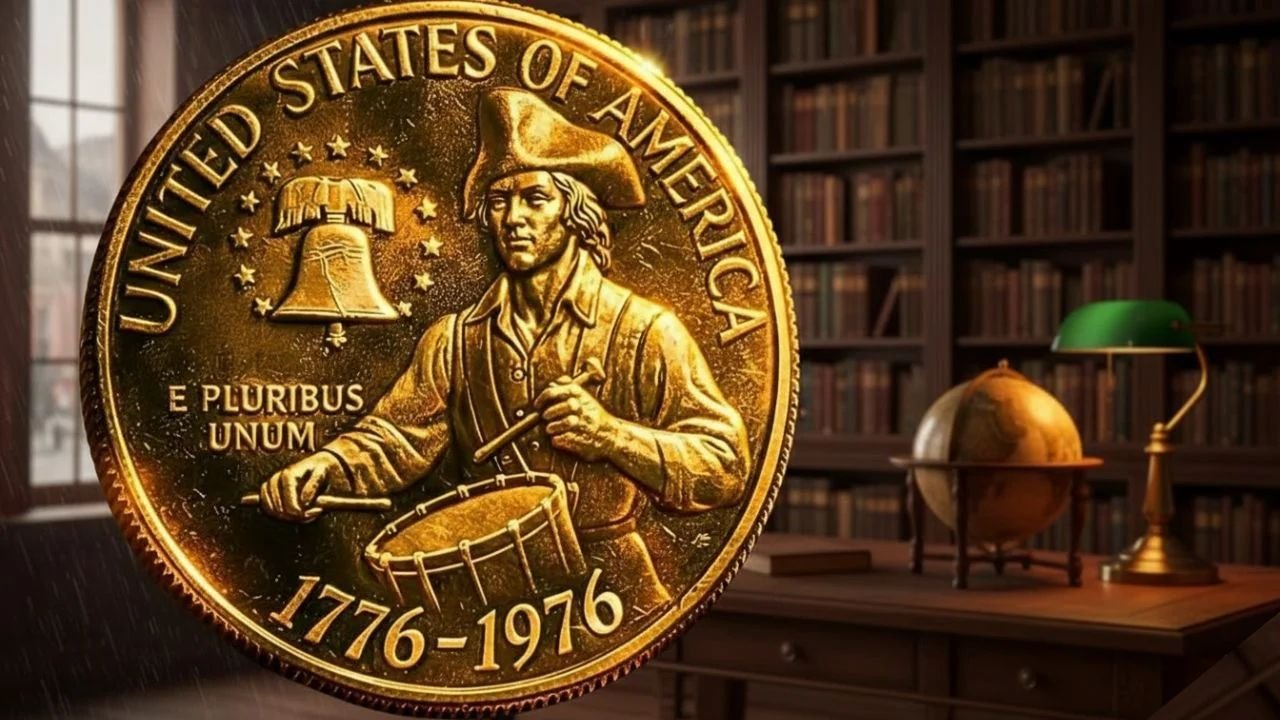
The 1776–1976 Bicentennial Quarter is one of the most recognizable coins in modern American history. Created to celebrate 200 years of independence, it carries patriotic symbolism and widespread nostalgia. While millions were struck, certain versions command strong premiums in today’s collector market.
For investors and enthusiasts alike, understanding what separates a standard 25-cent piece from a high-value rarity is the key to unlocking its potential.
A Historic Celebration in Metal
To commemorate the 200th anniversary of the Declaration of Independence, the United States Mint launched a nationwide redesign program in the mid-1970s. Instead of issuing quarters dated 1975, all pieces released in 1975 and 1976 carried the dual date “1776–1976.”
The obverse retained the familiar portrait of George Washington, originally designed by John Flanagan. The reverse, however, was completely reimagined.
Artist Jack L. Ahr created the iconic Colonial Drummer design. The imagery features a Revolutionary War drummer boy beside a victory torch encircled by thirteen stars, representing the original colonies.
This design instantly became a national keepsake and remains one of the most collected modern U.S. coin issues.
Production Years and Mint Locations
Although all coins display the dual date, Bicentennial Quarters were produced in 1975 and 1976. They were struck at three facilities:
- Philadelphia (no mint mark)
- Denver (“D” mint mark)
- San Francisco (“S” mint mark)
San Francisco primarily produced collector versions, including proof and 40% silver issues.
Understanding mint origin plays a crucial role in determining value.
Composition: Clad vs. Silver
Most Bicentennial Quarters found in circulation are copper-nickel clad coins. These have a visible copper stripe along the edge.
However, a special 40% silver version was produced for collectors. These were not released into general circulation and were sold in special mint sets.
How to Identify Silver Versions
Check the edge of the coin:
- Clad version: Visible copper-colored stripe
- Silver version: Solid silver-colored edge
Silver coins also tend to have a slightly different luster and weight. Because of their precious metal content alone, silver Bicentennial Quarters are worth more than face value—even before collector premiums are applied.
What Makes a Bicentennial Quarter Valuable?
While the majority remain worth 25 cents, several factors can significantly increase value.
1. Silver Content
The 40% silver issues carry intrinsic metal value and stronger collector demand, especially in high grades.
2. Condition and Grade
Coins in uncirculated condition with strong luster and minimal marks are more desirable. High-grade examples graded MS-67 or above by professional services can command substantial premiums.
Proof coins from San Francisco, particularly deep cameo examples with strong contrast, also attract advanced collectors.
3. Mint Errors
Errors create scarcity within an otherwise common issue. Some of the most valuable Bicentennial Quarters include:
- Doubled die obverse or reverse
- Off-center strikes
- Clipped planchets
- Wrong planchet errors (struck on dime or foreign blanks)
Well-documented error coins have sold for hundreds or even thousands of dollars, depending on severity and condition.
4. Population Rarity
Even coins with large original mintages can become valuable if very few survive in top condition. Population reports from grading services reveal how many examples exist at specific grade levels, which directly influences pricing.
Current Market Perspective
In circulated condition, standard clad Bicentennial Quarters remain face value coins.
Uncirculated clad examples typically trade for modest premiums, depending on eye appeal and certification.
40% silver versions in average uncirculated condition often range from modest collectible premiums above their silver content. However, certified high-grade silver proofs can reach significantly higher levels in the right auction environment.
Exceptional error coins or ultra-high-grade certified pieces represent the true upside potential.
Quick Reference Overview
- Years Produced: 1975–1976 (all dated 1776–1976)
- Obverse: George Washington
- Reverse: Colonial Drummer by Jack L. Ahr
- Standard Composition: Copper-nickel clad
- Collector Composition: 40% silver
- Mint Marks: None (Philadelphia), D (Denver), S (San Francisco)
- Face Value: $0.25
How to Evaluate Your Coin
If you discover a Bicentennial Quarter, follow this simple process:
Step 1: Confirm the Dual Date
Ensure it reads 1776–1976.
Step 2: Check the Mint Mark
Look near Washington’s ponytail for a small letter indicating the mint.
Step 3: Inspect the Edge
Determine whether it is clad or silver.
Step 4: Examine Condition
Look for strong detail in the drummer’s features and Washington’s hair. Minimal scratches and bright luster increase desirability.
Step 5: Search for Errors
Use magnification to check for doubling, strike misalignment, or unusual metal characteristics.
Should You Get It Professionally Graded?
Professional grading is recommended only if:
- The coin appears to be silver and in near-perfect condition
- You suspect a genuine mint error
- Surface quality suggests an exceptionally high grade
For most circulated clad examples, grading costs would exceed the coin’s market value.
Why the Bicentennial Quarter Still Matters
Beyond potential profit, the 1776–1976 Bicentennial Quarter represents a defining national milestone. It marked a moment when everyday currency became part of a broader cultural celebration.
Millions of Americans saved these coins as souvenirs, creating a generational connection to the country’s 200th anniversary.
Today, collectors continue to seek premium examples not only for financial reasons but for the symbolism they carry.
Final Thoughts
The Bicentennial Quarter proves that value in numismatics is not always obvious at first glance. While most remain everyday pocket change, select silver issues, pristine high-grade examples, and genuine mint errors can carry meaningful premiums.
Knowledge is the true differentiator. By understanding composition, mint origin, condition, and rarity, you position yourself to recognize opportunity when it appears.
The next time a 1776–1976 quarter crosses your path, take a closer look. Hidden within that familiar design may be more than a piece of history—it could be a valuable addition to a growing collection.